

How To Check Dfs Replication Status In Windows 2012
Introduction
Distributed File System Replication (DFS-R or DFSR) is a native replication service in Windows that organizations can use to replicate folders across file servers in distributed locations. DFS-R is bachelor in Microsoft Windows Server 2008 R2 and later and serves multiple purposes, from replicating the SYSVOL directory (replacing the older FRS) and as a replacement for the DFS Namespaces replication engine.
DFS-R tools to check replication condition (Microsoft Windows Server 2008, Windows Server 2012, Windows Server 2016)
Here are a few basic tools that may help provide insight into DFS-R status. However, these tools are very limited. You may need a more robust solution if y'all are looking for: a detailed status of the DFS-R replication procedure, a DFS-R health check, forced replication, or performance tuning. We provide more insight into alternative tools, such equally Resilio'due south DFSR Solution, in this blog post.
Option #ane
You could use a PowerShell command line from Microsoft.
1. Get-DfsrBacklog:
This command shows retrieves pending updates between ii computers that participate in DFS-R file replication service.
PS C:\> Become-DfsrBacklog -SourceComputerName "MyServer" -GroupName "G01" -FolderName "Folder" Identifier : {DCE7FC28-5584-4D5D-BC84-2BD9D53CC5FC}-v538 Flags : five Attributes : 32 GlobalVersionSequenceNumber : {DCE7FC28-5584-4D5D-BC84-2BD9D53CC5FC}-v538 UpdateSequenceNumber : 71575496 ParentId : {997D8F76-1207-49D7-85C9-DED015105A2F}-v1 FileId : 562949953495210 Book : \\.\C: Fence : 3 Clock : 130078672846368199 CreateTime : iii/xv/2013 v:28:04 PM UpdateTime : three/15/2013 5:28:04 PM FileHash : 173b51c11257a2eb 8c05884560fcfd1d FileName : file.exe FullPathName : c:\folder\file.exe Alphabetize : 1 ReplicatedFolderName : binder Replicated Folder Id : 997d8f76-1207-49d7-85c9-ded015105a2f ii. Get-DfsrState:
This command shows y'all the current replication country of DFS-R in regard to its DFS replication grouping partners.
PS C:\> Get-DfsrState -ComputerName "Server" | Format-Tabular array FileName,UpdateState,Inbound,Source* -Auto -Wrap FileName UpdateState Inbound SourceComputerName -------- ----------- ------- ------------------ ntfrs - Copy.exe Scheduled Truthful SRV02 ntdsai - Copy.dll Scheduled True SRV02 NlsLexicons0046 - Copy.dll Scheduled True SRV02 NlsLexicons000a - Copy.dll Downloading True SRV02 occache - Copy.dll Scheduled True SRV02 NlsModels0011 - Copy.dll Scheduled True SRV02 NlsLexicons0007 - Copy.dll Scheduled True SRV02 NlsLexicons000f - Re-create.dll Downloading True SRV02 NlsLexicons003e - Re-create.dll Scheduled True SRV02 NlsLexicons0045 - Copy.dll Scheduled Truthful SRV02 NlsData001a - Copy.dll Downloading True SRV02 ntlanui2 - Copy.dll Scheduled True SRV02 Selection #2
Pick two is to utilize the Dfsrdiag.exe tool that provides DFSR status. In the latest Windows Server builds, DFS Direction Tools may not be installed. You should execute the following command from PowerShell to install it.
Install-WindowsFeature RSAT-DFS-Mgmt-Con DFS-R Deficiencies
The DFS-R service is widely used and suffers from well-known deficiencies, foremost amidst these being a general lack of visibility into the replication process. DFS-R is effectively a "black box," indicating nothing almost the current status of the service. When relying on DFS-R and its algorithms for mission-critical replication, this lack of visibility tin exist extremely frustrating for administrators tasked with keeping these critical services operational and users happy.
For mission-critical information replication, customers crave additional functionality from the service as follows:
- A detailed condition of the DFS-R replication process
- DFS-R wellness cheque
- DFS-R force replication
- DFS-R performance tuning (making replication times predictable and consequent)
- DFS-R real-time monitoring
- DFS-R GUI/Dashboard
Many of these address basic visibility and control issues inherent in the service. For example, a common hurting customers experience is when a file is sitting in a SCHEDULED land with no clear manner to offset the replication. Waiting for the service to "go around to it" is not a viable option. A elementary "strength replication" feature would solve these bug. Another common complaint from customers is the performance of the service is often inconsistent. Replication times should be anticipated and fast, especially for mission-critical workflows, regardless of the network topology (i.e. full mesh, hub/spoke).
There are some bones resources available in Windows whereby users can gain limited condition information on the DFS-R service. The most commonly used are the ones mentioned earlier.
The Future of DFS Replication in Windows Server
Despite these configure tools, information technology's clear from the customs that to make DFS-R an acceptable awarding for mission-critical work would require meaning development from Microsoft. Unfortunately, the prospects of Microsoft fixing these deficiencies is not likely. With the release of Azure File Sync in 2017, the roadmap for DSF-R is not promising every bit Microsoft conspicuously views Azure and Azure File Sync equally the migration path for DFS-R. Not only will DFS-R no longer come across needed evolution to ready these issues, but it will too evidently face end-of-life at some point in the well-nigh hereafter with dwindling back up until then. The operational risks around continued DFS-R usage will further chemical compound as more Microsoft resources are shifted to Azure.
Better Options to Consider Instead of DFS Replication in Windows Server
For customers looking to address these risks and improve visibility into critical replication processes without migrating everything to Azure, Resilio Connect is a comprehensive solution. It addresses most or all of the deficiencies of DFS-R and it works with the file and storage services and servers you already accept while offering a migration path to the deject at any betoken in the future.
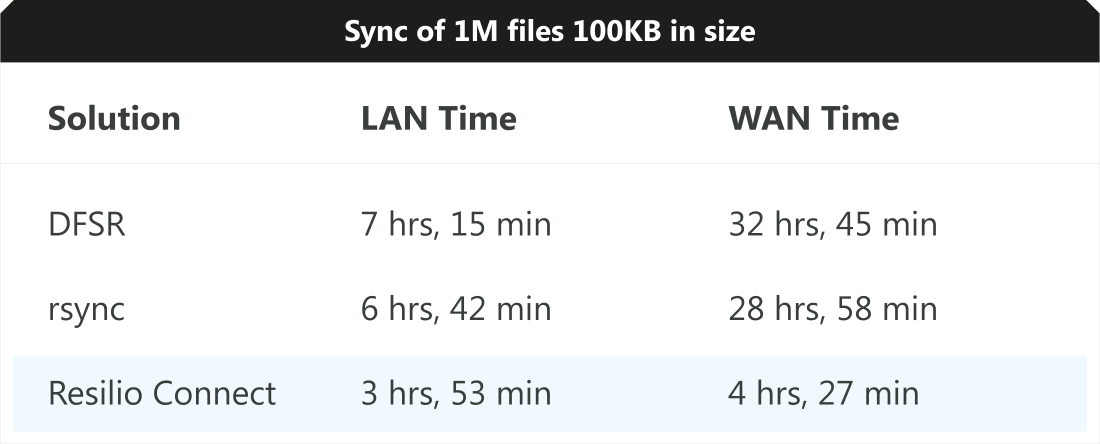
Resilio Connect delivers improved visibility, reliable replication, predictable (besides as faster) file propagation times, and much more equally detailed in the table beneath.
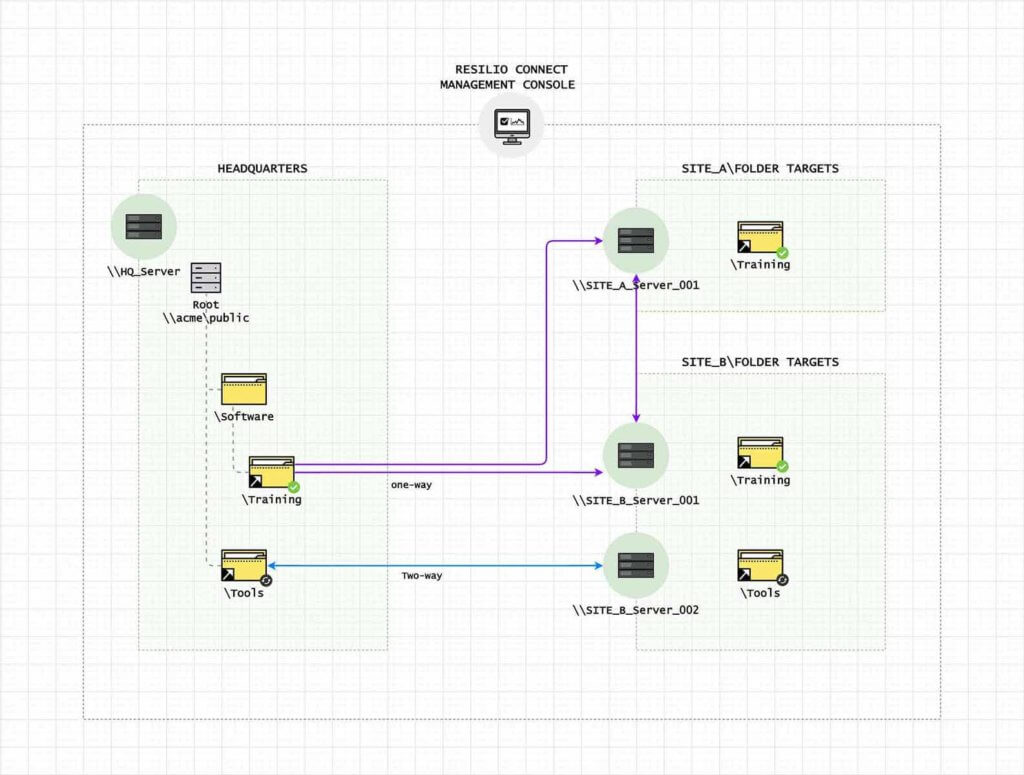
Instead of fighting a losing boxing with DFS-R, Resilio Connect solves the problem one time and for all, frees upward lost productivity and improves daily operations for most mission-critical data replication needs of shared folders and files.
| Features | Resilio Connect | DFS-R |
| Reliability | ✔ | |
| Guaranteed replication time | ✔ | |
| GUI | ✔ | |
| Efficient fault recovery | ✔ | |
| Multi-threaded | ✔ | ✔ |
| Multi-master | ✔ | ✔ |
| Differential sync engine | ✔ | ✔ |
| Peer-to-peer | ✔ | |
| File versioning | ✔ | |
| Object storage back up (S3, Azure Blob, others) | ✔ | |
| 10 Gbps replication speed | ✔ | |
| Bandwidth throttling scheduler | ✔ | ✔ |
| ReFS support | ✔ |
Learn more almost Resilio Connect's DFSR Replacement and how much faster and more than reliable information technology can be. Or signup to discuss your environment, come across a demo and beginning a free trial.
Source: https://www.resilio.com/blog/how-to-check-dfs-replication-status
Posted by: plylerdowits1958.blogspot.com
0 Response to "How To Check Dfs Replication Status In Windows 2012"
Post a Comment